
Why Reciting a Sutra?
Accomplishing self-discipline, deep concentration, and wisdom concurrently-- Cultivating Meditative Concentration
Single-mindedly chanting a sutra without wandering thoughts, distractions, or doubt -- this is cultivating meditative concentration.
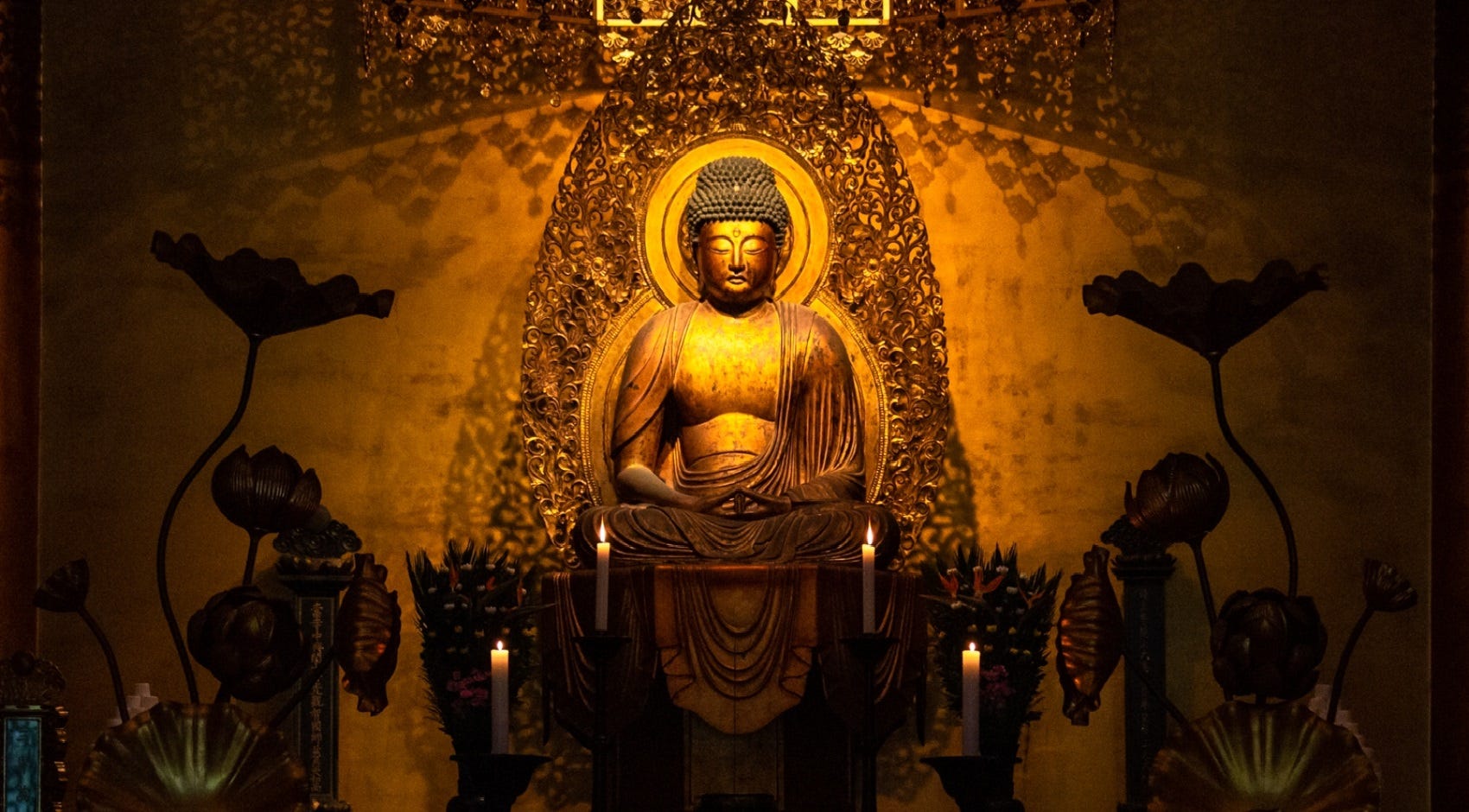
What is the first step in learning Buddhism?
Start by reciting one sutra.
Are we supposed to understand the sutra text?
No, not while you focus on reciting the sutra. And, when we have not ended afflictions, our understanding will be erroneous.
Then why do we practice reciting the sutra?
By reciting the sutra, the Three Learnings of self-discipline, deep concentration and wisdom are accomplished concurrently.
Reciting a sutra is cultivating Meditative Concentration.
Self-Discipline
Self-discipline requires that we “Do nothing that is bad. Do all that is good”. Reciting a sutra can prevent us from generating wandering thoughts so we will be prevented from doing anything that is bad.
Sutras are words that flow from the Buddha’s true nature. Nothing can surpass these words in virtue. Therefore, reciting a sutra is doing all that is good and results in the perfection of self-discipline so there is no need to practice the precepts one-by-one.
Deep Concentration
When reciting a sutra, we must focus. By focusing, we cultivate concentration. Clearly enunciating every word correctly without any omission is the practice of wisdom. Therefore reciting the sutra properly is to practice the Three Learnings at the same time.
Any attempt to analyze the sutra while reciting is in fact treating the sutra as a worldly book. This will result in none of the Three Learnings being accomplished and is not true cultivation.
Never belittle the practice of sutra recitation, as it is the fundamental base of cultivation. Reciting for one hour accomplishes one hour of cultivation, reciting for two hours accomplishes two hours of cultivation and so forth. Needless to say, the longer the better.
So while our chanting does plant a seed in our Alaya consciousness, the seed is dormant for now. But even though the benefit is small and not immediate, it is better to chant a sutra than not to chant at all.
Whether you chant with a focused mind or with a wandering mind, you will plant a seed in your Alaya Consciousness. If you chant with a focused mind and with sincerity, the vitality of the seed will be strong. If you chant with a wandering mind or with reluctance, the vitality of the seed will be weak.
Wisdom
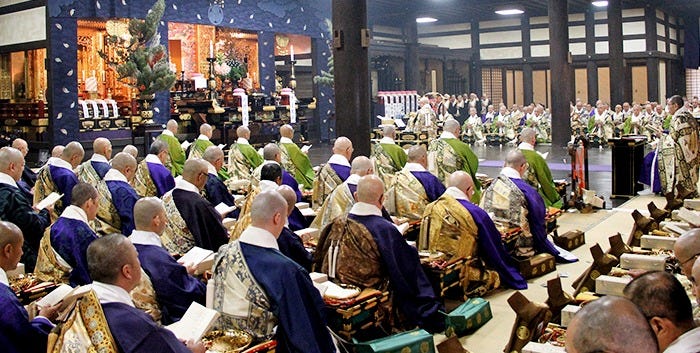
Many fellow practitioners in Taiwan and Dallas (Pure Land Centers) are reciting the Infinite Life Sutra ten times a day. So far, some may have chanted the sutra over two thousand times, thus they are very familiar with the text and only need thirty to forty-five minutes to finish one sutra. Reciting ten times thus means five or six hours of practicing self-discipline, deep concentration, and wisdom. With so many hours devoted to cultivation, we will naturally develop a serene mind in just a few years’ time.
Sutras flow from the pure and quiet mind of the Buddha. When we have developed a mind as pure and quiet, we will understand (with wisdom) all we read in the sutra. The reason why the sutra is so hard to understand now is that our minds are filled with wandering thoughts. How can this mind be in harmony with one that is pure and quiet? This is why we do not understand the Buddha’s words. So, if we want to learn from a good teacher, we need to trust and believe that their methods are proper and correct.
Just chose one sutra without being distracted by any other. If we chose to follow the Pure Land School, we recite and study the Infinite Life Sutra. If we choose to follow the T’ian Tai School we recite and study the Lotus Sutra. If we choose to follow the Flower Adornment School we recite and study the Flower Adornment Sutra. When choosing a school, one should follow its principles and delve deeply into the sutra for five years. In other words, sever all afflictions and try to develop a pure and quiet heart. This is the first step in learning Buddhism.
Frankly speaking, five years of learning and cultivation were enough for a practitioner to attain a pure mind in the past, because their minds were not as polluted as ours now are. In the past, children would remain innocent until around ten years of age. Then they would begin to be aware of differences between right and wrong, self and others. They would begin to develop such characteristics as greed, anger, ignorance, and arrogance.
However, look at today’s children. They start showing greed, anger, ignorance, and arrogance when they are only a few years old! Where do they learn these things? From mass media. They are exposed to mass media and the Internet every day. They naturally become polluted. They do not have the happy innocent childhood their parents had. How unfortunate they are!
True happiness is to remain innocent as long as possible in childhood and to not be aware of any of the suffering in the world. All the children knew was how to play. Once we lose our childhood’s innocence, we are no longer happy. For then, we have to be constantly aware of others. So, it’s fair to say modern people are less fortunate than their predecessors are.
Sutras flow from the pure and quiet mind of the Buddha.
When we have developed a mind as pure and quiet, we will understand (with wisdom) all we read in the sutra.
Beyond the Three Learnings
Once we have developed a pure and quiet mind and have attained wisdom, then we can begin to broaden our knowledge. We can see, hear, and learn of anything that we are interested in, for then we have already attained wisdom and will not be affected by our surroundings.
Since we have self-control, the more we see and hear the wiser we will become and the greater our strength from deep concentration will be.
How are deep concentration and wisdom increased? Remaining unmoved by surroundings will enhance deep concentration. Developing a clear and understanding mind will enhance wisdom. Then we can learn from other schools to further enhance our deep concentration and wisdom.
First, we practice self-discipline, concentration and wisdom to attain our original wisdom. Then, we can learn extensively to perfect our acquired wisdom. This is the way of learning from ancient times.
The Buddha once taught us in the Great Prajna Sutra, “Innocent intuitive wisdom knows all”. So, we must cultivate “innocence” first. The five-year method of practicing self-discipline results in our “staying innocent” of the happenings in the world. When we are again in contact with the world, we will be aware of “knowing all”. This is the proper sequence and method to learn and practice Buddhism.
All schools of the Mahayana Buddhism adopted this framework of learning and teaching, and followed the practice of the Three Conditions, the Six Principles of Harmony, the Three Learnings, the Six Paramitas, and the Ten Great Vows.
To sum up, chanting a sutra is cultivating the precepts, cultivating meditative concentration, and cultivating wisdom. When chanting a sutra, one simply reads the words, without thinking of their meaning. Chanting sincerely this way is cultivating the precepts, meditative concentration, and wisdom. The sutras are to be recited daily but not for the benefit of the Buddha. We recite them as a daily reminder of how we should cultivate our mind and properly interact with others in circumstances. To reap the true benefit, we must conscientiously and wholeheartedly follow the method without being distracted by anything new or different.
Namo Amitabha!
Note: The above is an excerpt from the book, “Buddhism: The Awakening of Compassion and Wisdom” and the full text is available free for download (PDF).
___

See also:
. Why Amitabha’s Pure Land?
. Chanting: The Ten Recitation Method
. Amitabha Mindful Chanting Music Collection
Start Amitabha Mindful Chanting now.
Make the vow to reborn to the Western Pure Land in this lifetime!